


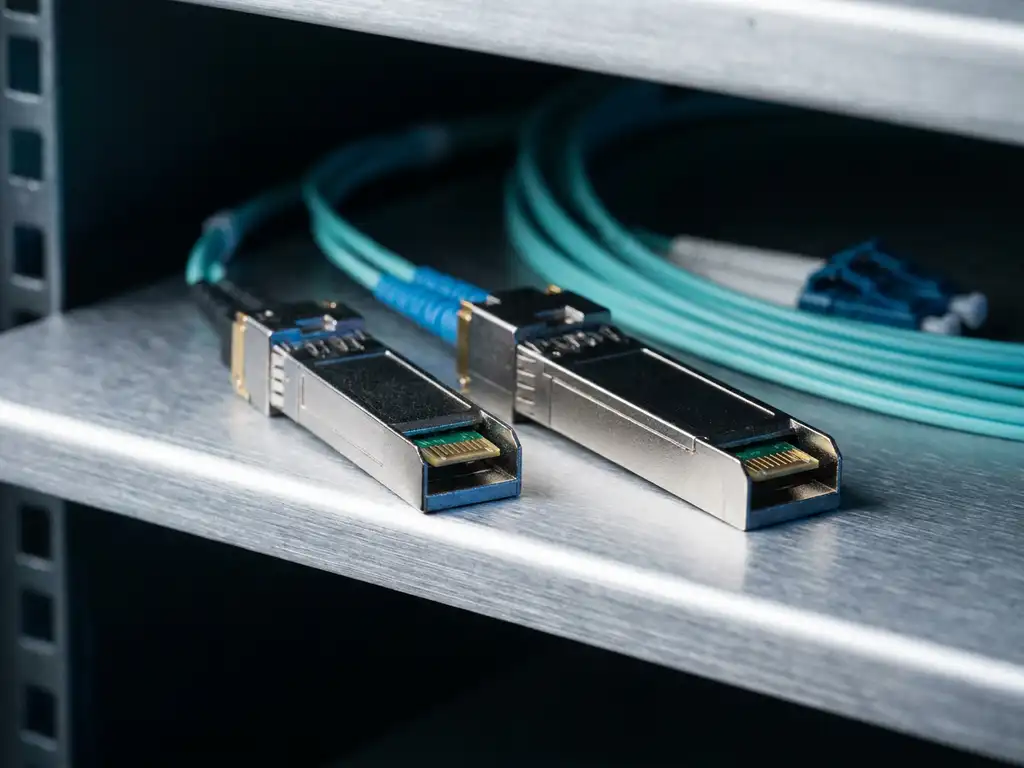
The most important difference between SFP and SFP+ modules lies in their data rate: SFP modules support up to 1 Gbps, while SFP+ modules can handle up to 10 Gbps. Both are optical transceivers for fiber optic communication, but SFP+ offers ten times the bandwidth. The choice depends on your current network needs, future plans, and budget. SFP+ modules are backward compatible with SFP ports, but will operate at a lower speed in that configuration.
What are SFP modules and what are they used for?
SFP modules are small, hot-swappable optical transceivers that convert fiber optic signals into electrical signals and vice versa. They enable flexible connections between network devices over various distances and fiber types. SFP stands for Small Form-factor Pluggable, referring to their compact size and hot-swappable nature.
These network modules are essential for modern fiber optic communication because they offer several advantages. They allow network equipment to be adapted to specific connection requirements without replacing hardware. For example, you can choose between single-mode modules for long distances or multimode modules for shorter connections within buildings. If you want to explore how optical networking fits into a broader infrastructure strategy, take a look at the optical solutions available for different environments and use cases.
SFP modules are widely used in switches, routers, and other network equipment. They support a variety of protocols and distances, from a few hundred meters to tens of kilometers. This flexibility makes them valuable for organizations looking to optimize their network infrastructure without major investments in new hardware.
What is the key difference between SFP and SFP+ modules?
The key difference between SFP and SFP+ modules is the maximum data rate: SFP supports up to 1 Gbps, while SFP+ can handle up to 10 Gbps. SFP+ modules also consume more power, yet are physically identical to SFP modules, allowing them to fit in the same ports.
Technically, both module types use the same connector and have identical dimensions. The difference lies in the internal electronics and signal processing. SFP+ modules support more complex modulation techniques and feature more advanced chips to handle the higher data rates.
Compatibility is an important consideration: SFP+ modules work in SFP ports, but will run at a maximum of 1 Gbps in that case. Conversely, SFP modules cannot be used in SFP+ ports when the device specifically requires 10 Gbps. However, most modern devices automatically support both types.
Practical applications also differ. SFP modules are ideal for standard office networks, access layers, and connections where 1 Gbps is sufficient. SFP+ modules are used for backbone connections, data centers, and situations where high bandwidth is critical to business operations. A well-designed networking solution takes both current performance requirements and future scalability into account when selecting the right module type.
How do you know which module best suits your network needs?
The choice between SFP and SFP+ depends on your current bandwidth requirements and future plans. Start by analyzing your network traffic: if you regularly exceed 70% of 1 Gbps, SFP+ is a sound investment. For standard office applications, SFP is usually sufficient.
Budget plays an important role in the decision. SFP+ modules cost more than SFP modules, but the price gap is narrowing. Consider the total cost of ownership: investing in SFP+ now can prevent costly upgrades later as your bandwidth requirements grow.
Future-proofing is critical for network infrastructure. If your organization is growing, adopting more cloud services, or planning for video applications, SFP+ provides more room to scale. The additional bandwidth prevents bottlenecks that can slow down business operations. Organizations that rely heavily on cloud-based platforms may also benefit from reviewing dedicated cloud solutions to ensure their optical layer keeps pace with their overall IT strategy.
Specific business use cases also influence the decision. Data centers, hospitals with medical imaging, and organizations with heavy file transfer workloads benefit from SFP+. For standard email, web browsing, and basic business applications, SFP is often sufficient.
What common mistakes should you avoid when selecting optical modules?
The most common mistake is overlooking compatibility issues between modules and network equipment. Not all SFP modules work in all devices, even if they share the same connector. Always check manufacturer compatibility lists before placing an order.
Choosing the wrong distance specifications is another costly error. Single-mode modules designed for long distances do not perform optimally over short multimode connections, and vice versa. Measure your fiber distances and choose modules that match your infrastructure.
Budget considerations often lead to shortsighted decisions. Cheap, uncertified modules may seem like a bargain, but they frequently cause issues with performance, reliability, and warranty coverage. Invest in quality modules from reputable suppliers.
A lack of future planning leads to rapid obsolescence. Choose modules that align with your growth strategy. If you’re unsure whether to go with SFP or SFP+, consider the long-term cost of potential upgrades versus the initial investment.
For reliable optical networking products and professional advice on the right module specifications, turn to specialists with experience across diverse network environments. Netways Europe offers managed services and vendor-independent expertise to help organizations make the right choices for their specific optical infrastructure, ensuring your investment is both future-proof and cost-effective.
Frequently Asked Questions
Can I use SFP+ modules in older switches that only support SFP?
Yes, SFP+ modules are backward compatible with SFP ports. However, they will operate at the maximum speed of the SFP port (1 Gbps) rather than their full 10 Gbps capacity. This makes it possible to upgrade gradually without replacing all equipment at once.
How long do SFP and SFP+ modules last, and when should I replace them?
Quality SFP modules typically last 5–10 years under normal use. Replace them when you experience signal loss, frequent connection drops, or when the LED indicators show errors. Also factor in technological obsolescence if your bandwidth requirements change.
What is the difference between single-mode and multimode SFP modules, and which one do I need?
Single-mode modules are designed for long distances (up to 80+ km) over thinner fiber, while multimode modules are suited for short distances (up to 550 m) over thicker fiber. Check which type of fiber cable you have installed — this determines which module you need.
How do I test whether my new SFP module is working correctly after installation?
First, check the LED status on your device (green = good, red/amber = issue). Then test the connection speed using network tools and monitor signal loss. Run a ping test to the other end and verify that the negotiated speed matches your expectations.
Can I save money by buying compatible third-party SFP modules instead of original manufacturer modules?
Yes, compatible modules from reputable suppliers can be 50–80% cheaper than original modules, provided they are fully tested. Just make sure they are certified for your specific equipment and that the supplier offers a warranty and support.
What happens if I accidentally use different types of SFP modules at each end of a connection?
This can result in connection issues or no connection at all. Both ends must have compatible modules (e.g., both single-mode or both multimode) with matching specifications. Modern devices often detect this automatically, but the connection will not perform optimally.
How do I prepare for a future upgrade from SFP to SFP+ without major disruptions?
Plan phased upgrades by first installing SFP+ modules in critical backbone connections. Upgrade switches gradually and thoroughly test each phase. Ensure your fiber infrastructure supports higher speeds and account for the increased power consumption of SFP+ equipment.
Ready to take the next step?
Explore our solutions or get in touch with one of our experts directly.