



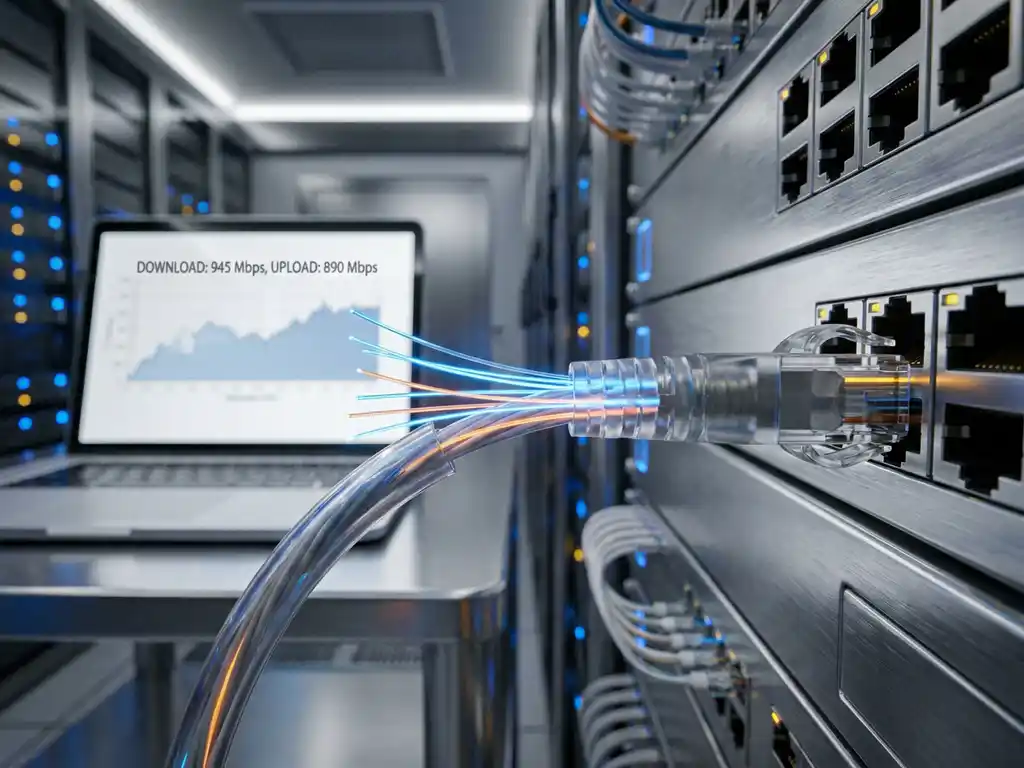
Monitoring fiber optic performance starts with recognizing warning signs such as slow speeds, connection drops, and high latency. By running regular measurements with the right tools, you can detect and resolve network performance issues early. A fiber optic connection performing at its best ensures reliable connectivity and maximum bandwidth for your organization.
What are the key signs that my fiber optic connection is not performing optimally?
The most common signs of poor fiber optic performance are slow download speeds, frequent connection drops, high latency (delay), and packet loss. These symptoms point to issues in your optical connection that negatively affect network performance.
Slow speeds are often the first thing noticed when files download slowly or cloud services become unresponsive. Connection drops manifest as brief outages of internet connections or applications. High latency is most noticeable during video calls or real-time applications, where delays become disruptive.
Packet loss causes stuttering video streams, interrupted VoIP calls, and sluggish application responses. These issues may indicate physical damage to the fiber optic cable, dirty connectors, or configuration problems in your network infrastructure.
Also monitor the stability of your connection throughout the day. Performance issues that only occur during peak hours may indicate capacity problems or congestion on your fiber optic connection.
What tools and methods can I use to measure fiber optic performance?
For fiber optic measurements, you can use both basic online speed tests and professional network diagnostic tools. Simple tools measure bandwidth and latency, while advanced instruments also analyze jitter, packet loss, and signal quality.
Online speed tests such as Speedtest.net or Fast.com give a quick indication of your download speed, upload speed, and ping time. For reliable results, run these tests at different times of day from various devices on your network.
Professional tools such as ping commands, traceroute, and iperf provide more detailed insights. These command-line tools test specific aspects of your fiber optic quality and help pinpoint bottlenecks.
Network monitoring software can continuously track your fiber optic performance and map out trends. This helps identify patterns and predict potential issues before they become critical to your business operations. For organizations that prefer to outsource this ongoing oversight, managed services can provide continuous monitoring and proactive management of your network.
Ready for the next step?
Explore our solutions or get in touch directly with one of our experts.
How do I interpret the results of fiber optic performance tests?
The key performance indicators are bandwidth, latency, jitter, and packet loss. For business use, you should expect at least 95% of your contracted bandwidth, latency below 20 ms, jitter below 5 ms, and packet loss below 0.1%.
Bandwidth measures the maximum data transfer rate of your fiber optic connection. Values significantly lower than contracted indicate configuration issues or physical limitations in your optical connection.
Latency (ping time) is critical for real-time applications. Values above 50 ms can cause problems during video conferences and VoIP calls. Jitter measures variation in latency and must remain stable to maintain good call quality.
Packet loss rates above 1% cause noticeable performance degradation. Always interpret results in the context of your specific applications, and compare measurements over time to identify trends that point to deteriorating fiber optic quality.
What are the most common causes of poor fiber optic performance?
Physical damage to fiber optic cables, dirty or damaged connectors, and incorrect network configuration are the primary causes of performance issues. Connection congestion and environmental factors can also affect fiber optic quality.
Dirty connectors cause signal loss and reflections that disrupt the optical connection. Microscopic dust particles or fingerprints on fiber optic end faces can already cause significant performance degradation.
Damaged cables resulting from excavation work, rodents, or extreme temperature fluctuations lead to signal attenuation. Sharp bends in fiber optic cables can also cause internal fractures that interfere with light transmission.
Configuration issues such as incorrect transceiver settings, improper VLAN configuration, or bandwidth limiting can impose artificial restrictions. Congestion occurs when network traffic exceeds the capacity of your fiber optic connection during peak hours.
When should I bring in professional help for fiber optic optimization?
Seek professional assistance when basic troubleshooting yields no results, complex performance issues persist, or you require specialized diagnostics. Expert advice is also valuable when expanding your network infrastructure to ensure optimal performance.
Persistent issues that cannot be resolved with standard measures require in-depth analysis of your optical connection. Professional technicians have access to advanced measurement equipment such as an OTDR (Optical Time Domain Reflectometer) for precise cable analysis.
When your organization depends on critical fiber optic connections for business operations, proactive maintenance and monitoring are essential. Professionals can implement preventive measures and design redundant connections.
For optimization of complex network infrastructure, we offer fiber optic solutions tailored specifically to your organization. Our experts analyze your current setup and advise on optical networking products for maximum connectivity optimization.
Frequently Asked Questions
How often should I check my fiber optic performance?
For business use, we recommend at least monthly checks, with daily monitoring during critical periods. Automate where possible using monitoring tools that watch your connection 24/7 and send alerts when anomalies are detected. With new installations or after changes, test more frequently during the first few weeks to ensure stability.
Can I clean dirty fiber optic connectors myself?
Yes, with the right materials you can safely clean connectors. Always use dedicated fiber optic cleaning wipes and isopropyl alcohol (99%). Avoid regular tissues or cloths that can cause scratches. Check the result with a fiber optic microscope and repeat if necessary until the connector is completely clean.
What are acceptable performance deviations during peak hours?
A temporary drop to 80–85% of contracted bandwidth during peak hours is still acceptable. Latency may increase to a maximum of 30–40 ms without critical impact. If performance consistently falls below these values or remains poor for an extended period after peak hours, there is likely a structural capacity problem that requires attention.
How can I distinguish between provider-side and internal network problems?
First, test directly on the fiber optic modem using a wired connection. If performance is good there but poor through your internal network, the problem is internal. Also compare measurements with other customers of the same provider via online forums. Provider issues often show patterns in time and location that affect multiple customers.
What backup solutions are available in the event of a fiber optic outage?
Implement redundant connections via different routes or providers for critical applications. 4G/5G backup connections offer temporary solutions with lower bandwidth. For maximum reliability, combine multiple fiber optic providers with automatic failover systems that switch within seconds when the primary connection fails.
How do I prevent future performance issues?
Invest in preventive maintenance with annual professional inspections of cables and connectors. Document all changes to your network and monitor trends in performance data. Plan capacity expansions before your current bandwidth reaches its limit, and train your staff in basic fiber optic diagnostics for quick problem identification.
Ready for the next step?
Explore our solutions or get in touch directly with one of our experts.