


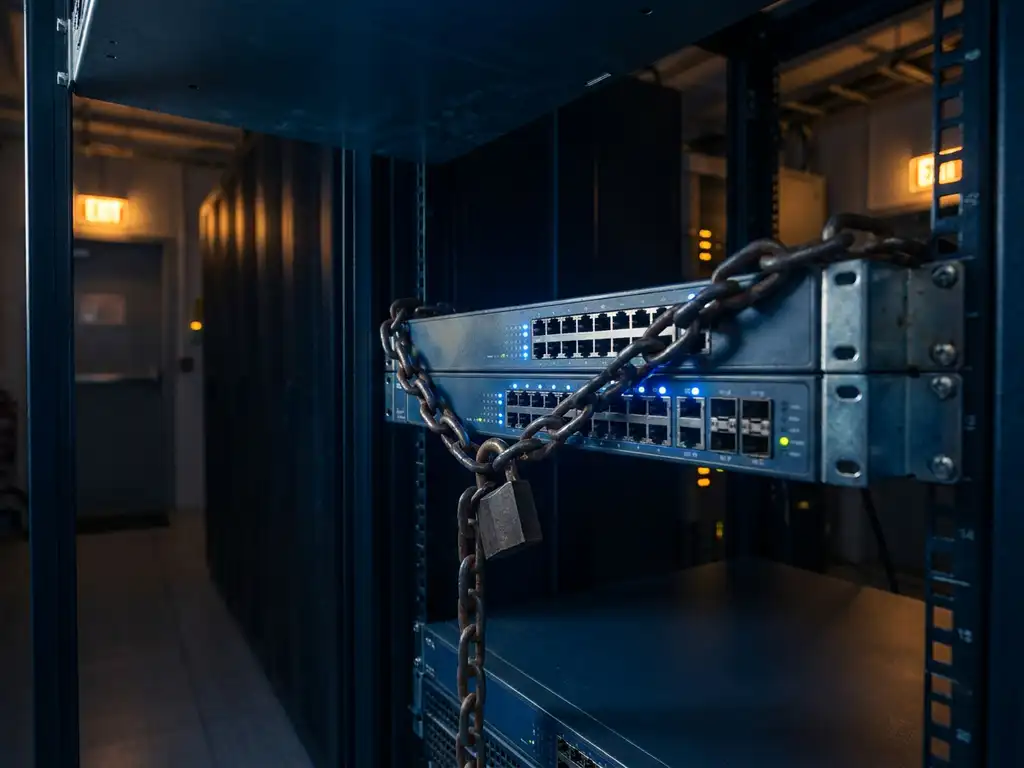
Keeping your network secure as AI-driven attacks increase requires a combination of intelligent detection, strong encryption, and well-designed security layers. AI makes attacks faster, more targeted, and harder to recognize than traditional threats. By 2026, network security is no longer a one-time measure but an ongoing process. This article answers the most important questions about how to effectively protect your network infrastructure against AI-driven cyber threats.
What makes AI attacks more dangerous than traditional cyber threats?
AI attacks are more dangerous than traditional cyber threats because they adapt at lightning speed, learn to recognize patterns, and adjust attack strategies in real time. Where a traditional attack follows a fixed script, an AI-driven attack learns from resistance and automatically searches for new vulnerabilities in your network.
Traditional attacks are predictable: they use known exploits, follow recognizable patterns, and are intercepted relatively quickly by standard security software. AI attacks work differently. They can:
- Evade detection systems by continuously adapting their behavior
- Analyze large volumes of data to find vulnerabilities faster than any human team
- Generate convincing phishing messages that are nearly indistinguishable from genuine communications
- Automatically scale attacks once an initial entry point has been found
The result is that the window between an initial intrusion attempt and a successful attack is shrinking dramatically. For organizations with critical network infrastructure such as hospitals, data centers, or transportation companies, this means that traditional security measures are simply no longer sufficient. Exploring a broader range of security solutions is an important first step toward closing those gaps.
Which network layers are most vulnerable to AI attacks?
AI attacks target all layers of the network model, but the application layer (layer 7) and the physical and data link layers (layers 1 and 2) are the most vulnerable. The application layer offers the most attack surface through software and protocols, while layers 1 and 2 are often overlooked in security strategies.
At the higher layers, such as the application and transport layers, AI attacks focus on exploiting protocols, intercepting traffic, and carrying out targeted intrusion attempts through known software vulnerabilities. Most security tools are aimed at these layers, but AI is making it increasingly easy to bypass them.
The lower layers of the network, the physical infrastructure and the data link layer, receive less scrutiny. Yet attacks at this level are particularly damaging: they are difficult to detect, can go unnoticed for extended periods, and strike the very foundation on which the entire network rests. Examples include tapping fiber optic connections or manipulating layer 2 protocols such as ARP or STP. Real-time fiber optic monitoring is one of the few ways to detect this type of attack in time. Purpose-built optical networking products can play a key role in establishing that visibility at the physical layer.
Ready for the next step?
Explore our solutions or get in touch with one of our experts directly.
How do you detect AI-driven attacks on your network infrastructure?
The most effective way to detect AI-driven attacks is to deploy AI-based monitoring that recognizes anomalous behavior in real time. Traditional rule-based detection is insufficient because AI attacks deliberately operate outside known attack patterns.
Effective detection requires multiple layers of monitoring:
- Behavioral analysis: Systems that establish a baseline of normal network traffic and flag deviations, even when those deviations are subtle
- Network monitoring at layers 1 and 2: Surveillance of the physical infrastructure for unauthorized access or signal anomalies
- Event correlation: Individual signals that each appear harmless but together form an attack pattern
- Out-of-band management: A separate management network that operates independently of production traffic, so you maintain visibility into your infrastructure even during an active attack
Speed is critical here. The sooner an anomaly is detected, the less damage it causes. Monitoring and network management are therefore an essential component of any modern security strategy. Managed security services can provide the continuous oversight needed to stay ahead of fast-moving AI-driven threats.
What is the difference between layer 1/2 encryption and higher encryption layers?
Layer 1/2 encryption encrypts data at the level of the physical connection or the data link layer, before traffic even enters the network. Higher encryption layers, such as TLS at layer 4 or application-level encryption at layer 7, encrypt data only after it has already passed through multiple network components.
This distinction has real practical significance. With layer 1/2 encryption:
- All traffic is encrypted regardless of protocol or application
- There is no visible difference in traffic patterns for an attacker, making metadata analysis significantly harder
- Encryption has virtually no impact on network latency
- Security is guaranteed independently of the software running at higher layers
Higher encryption layers offer greater flexibility and are easier to manage on a per-application or per-service basis, but they leave more traces and depend on correct implementation in software. For organizations that transport sensitive data over critical connections such as hospitals or financial institutions, layer 1/2 encryption provides an additional security layer that can be applied on top of higher-level encryption.
Which security measures best protect a network against AI threats?
The best protection against AI threats is a layered security strategy that covers both the physical infrastructure and the higher network layers. No single measure is sufficient on its own. The combination is what makes the difference.
The most effective measures are:
- Encryption at layers 1 and 2: Protects the physical connection and renders data interception meaningless
- Network segmentation: Limit an attacker’s freedom of movement by dividing the network into zones with strict access controls
- Real-time monitoring: Detect anomalies immediately, including at the lowest network layers
- Out-of-band management: Ensure that management traffic remains separate from production traffic, so you retain control even when the network is under attack
- Quantum-resistant security: Prepare for the next generation of threats by choosing encryption that can withstand quantum computing
- Access management and authentication: Restrict who can access which parts of the network and enforce strong, multi-factor authentication
Organizations in critical sectors are also subject to legal obligations under frameworks such as NIS2 and the Cybersecurity Act. These require demonstrable security measures, risk management, and incident reporting obligations. Protection against quantum threats is an increasingly important focus area for 2026 and beyond.
When is it time to have your network security professionally assessed?
It is time to have your network security professionally assessed when your infrastructure has grown without corresponding security updates, when your organization falls under NIS2 or similar legislation, or when you simply do not have a complete picture of what is happening on your network.
Concrete signs that an external assessment is worthwhile:
- You are not certain which devices are connected to your network
- Security measures are fragmented or not consistently applied across all network layers
- Your organization handles sensitive data or critical processes for which continuity is essential
- There have been recent changes to the infrastructure, such as a cloud migration or network expansion
- You cannot yet demonstrate compliance with applicable regulatory requirements
A professional assessment gives you not only insight into vulnerabilities, but also a prioritized improvement plan tailored to your specific risk profile and sector.
How we help secure your network infrastructure
We guide organizations in building network security that can withstand both today’s and tomorrow’s threats. Drawing on our security solutions and more than 20 years of experience in network infrastructure, we offer an approach that is both technically robust and practically achievable.
What we do in practice:
- Threat analysis and compliance: We map your current security posture and assess it against applicable frameworks such as NIS2 and the Cybersecurity Act
- Layer 1/2 encryption: We implement encryption at the physical and data link layers for maximum protection of sensitive data flows
- Real-time monitoring and management: We provide continuous surveillance of your network, including the lower layers that traditionally fall outside the field of view
- Quantum-resistant security: We advise on and implement solutions that are prepared for the next generation of cyber threats
- Vendor-independent advice: We select the solution that fits your infrastructure, risk profile, and sector without any preference for a particular brand
Want to know where your network stands today and which steps will have the greatest impact? Contact us for a no-obligation conversation with one of our engineers.
Ready for the next step?
Explore our solutions or get in touch with one of our experts directly.