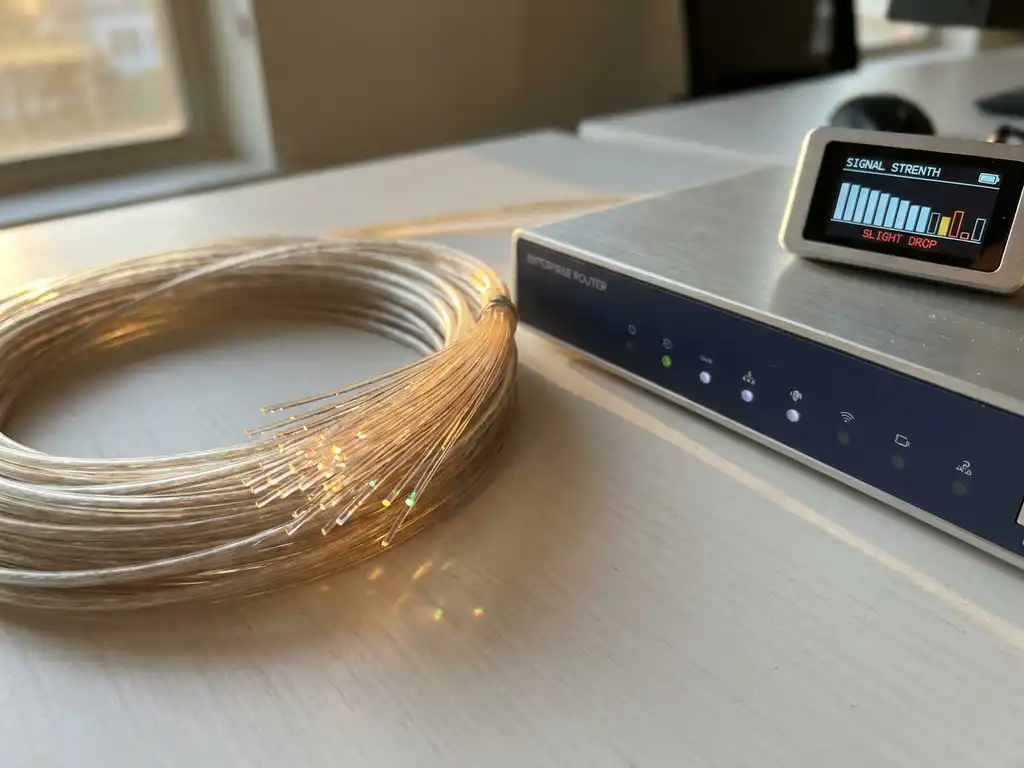
A fiber optic connection typically loses 5–10% of its original speed due to the physical properties of optical transmission. This loss is normal and unavoidable as a result of signal attenuation, connectors, and cable length. Greater speed losses may indicate network issues affecting your business operations and requiring professional attention.
What is normal speed loss for a fiber optic connection?
For a professional fiber optic connection, a speed loss of 5–10% is acceptable under normal conditions. This loss is caused by the physical properties of light transmission through fiber optic cable and is technically unavoidable.
Speed loss in fiber optics results from several factors inherent to optical transmission. Light signals naturally attenuate over distance, even in high-quality fiber. In addition, connectors, splitters, and couplers introduce minimal losses that accumulate across the entire connection.
For most business applications, network performance remains excellent within these normal loss margins. A 1 Gbps fiber connection losing 50–100 Mbps still delivers superior bandwidth compared to traditional copper connections.
The quality of your internet speed over fiber also depends on end-user equipment and network configuration. Modern optical connections largely compensate for natural signal attenuation through advanced transmission technologies.
What factors cause speed loss in fiber optic networks?
Signal attenuation, connectors, splices, and cable length are the primary causes of speed loss in fiber optic networks. These technical factors affect light transmission and, consequently, the overall network performance of your connection.
Signal attenuation occurs when light signals weaken during transport through the fiber optic cable. This natural phenomenon is influenced by the quality of the fiber, bends in the cable, and the wavelength of the light used. Longer distances result in greater attenuation.
Connectors and splices introduce additional losses at each connection point. Each connector can cause 0.1–0.5 dB of loss, while splitters divide the signal across multiple outputs. Dirty or damaged connectors significantly increase these losses.
Environmental factors such as temperature fluctuations, mechanical stress, and the bend radius of the cable also affect fiber optic bandwidth. Extreme temperatures can alter the refractive index of the fiber, resulting in higher losses.
The quality of active components such as transceivers, switches, and routers also determines final performance. Outdated or unsuitable equipment can create bottlenecks that negate the advantages of fiber optics. A well-designed networking infrastructure helps eliminate these bottlenecks and ensures consistent throughput.
Ready for the next step?
Explore our solutions or get in touch with one of our experts directly.
When does speed loss become a problem for your organization?
Speed loss becomes problematic when it exceeds 15–20% of the contracted speed or when business-critical applications respond slowly. Frequent connection drops and inconsistent performance are clear warning signs.
Performance indicators that warrant attention include increased latency, packet loss, and fluctuating bandwidth. When video conferences stutter, cloud applications load slowly, or file transfers take an unacceptably long time, productivity is directly affected.
Acceptable performance thresholds vary by organization and application. For standard office work, 80% of the contracted speed may be sufficient, but critical processes such as real-time data processing or medical imaging require consistent, high performance.
Monitoring your network infrastructure helps identify issues early. Regular speed tests, latency measurements, and network traffic analysis provide insight into the health of your fiber optic connection.
Symptoms such as increasing user complaints, slower backup processes, or problems with VoIP telephony point to underlying network issues that require professional diagnosis. In some cases, these issues can also have implications for network security, making timely attention all the more important.
How can you minimize speed loss with fiber optics?
Professional installation, regular maintenance, and quality control are essential for optimal fiber optic performance. Use high-quality components and ensure connectors are clean and properly aligned to prevent unnecessary losses.
Preventive maintenance includes regular inspection of connectors, checking for cable bends, and cleaning optical interfaces. Dirt and dust are common causes of performance issues that are easily preventable.
Choosing the right active components is critical for fiber optic optimization. Modern transceivers and switches can provide signal amplification and error correction that compensate for natural losses.
We offer professional optical solutions specifically designed for optimal performance in business environments. Our expertise in WDM, DWDM, and xPON technologies maximizes the capacity of your existing fiber optic infrastructure.
For complex network challenges, advanced optical networking products such as DCI solutions and high-performance SFP modules can significantly improve performance. These technologies offer redundancy and optimization for business-critical connections.
Regular performance measurements and proactive monitoring help prevent issues before they affect business operations. A well-designed network infrastructure with professional managed services ensures consistent, reliable fiber optic connectivity.
Frequently Asked Questions
How often should I test the speed of my fiber optic connection?
Test your fiber optic speed monthly during normal business hours and after any changes to your network infrastructure. For business-critical environments, we recommend weekly tests at different times of day to monitor consistency and detect performance trends early.
What are the first steps if my fiber optic connection suddenly becomes much slower?
First, check all physical connections and restart your active equipment (router, switches). Then test the speed directly from the fiber optic modem to rule out whether the issue lies within your internal network. Document when the problem started and contact your provider if the loss exceeds 20%.
Can weather conditions affect the performance of my fiber optic connection?
Extreme weather conditions can indirectly affect fiber optic performance through damage to above-ground infrastructure or temperature fluctuations in equipment rooms. However, underground fiber optic cables are highly weather-resistant. Issues typically arise from power outages affecting active components or damage to connection points.
Which measurement tools are most reliable for testing fiber optic speeds?
Use professional tools such as Ookla Speedtest, Fast.com, or your provider's testing environment for consistent measurements. Run tests from a wired connection, close other internet traffic, and test at different times of day. For business environments, specialized network monitoring tools such as PRTG or SolarWinds offer more detailed analysis.
Is it normal for my fiber optic speed to vary throughout the day?
Minor variations (5–15%) are normal due to network load at your provider and internet traffic in your area. Large fluctuations or consistent slowdowns during specific hours may indicate capacity issues at your provider or internal network bottlenecks that require attention.
When should I consider upgrading my fiber optic infrastructure?
Consider an upgrade when your current connection is consistently loaded above 80%, when new applications require higher bandwidth, or if your equipment is older than 5–7 years. Modern fiber optic solutions often offer better redundancy, lower latency, and support for future capacity needs.
Ready for the next step?
Explore our solutions or get in touch with one of our experts directly.